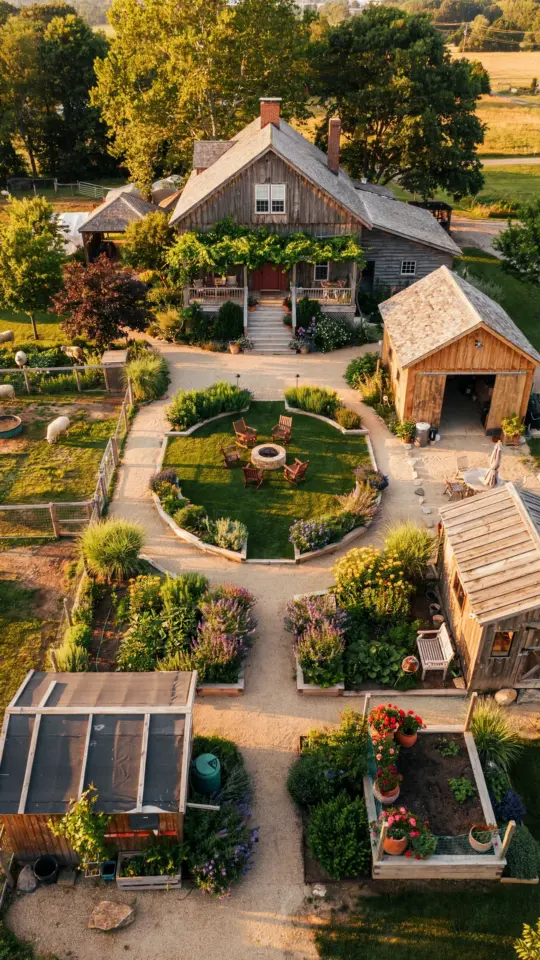
When I first started planning my small backyard farm, I had no idea how to fit a garden, a chicken coop, and a seating area into a space that was barely 30 feet wide. After several seasons of trial and error, I learned that a successful hobby farm layout for a compact yard doesn’t require sacrificing productivity. It just needs clever design and a willingness to think vertically. What worked for me was treating every square foot like a valuable resource, and I want to share those real-world solutions with you.
Planning a Compact Backyard Farm Layout That Actually Works
Before I bought a single plant or a bag of soil, I sat down and measured every corner of my yard. I drew a simple map on graph paper, noting where the sun falls, where the water spigot is located, and where the wind tends to blow. This helped me place my raised beds, coop, and compost area in a way that didn’t feel crowded.
Here is the layout trick that saved me the most space: I positioned the chicken coop along the fence line and used the shaded area underneath the coop for a worm bin. That way I didn’t waste a single inch. My garden beds are all 4 feet by 8 feet, which is wide enough to grow food but narrow enough to reach the center without stepping inside.
- Use graph paper to map sun and shade patterns first.
- Place the coop and compost bin along fences to free up central space.
- Keep beds no wider than 4 feet so you can reach the middle easily.
- Plan paths at least 2 feet wide for a wheelbarrow.
Vertical Garden Systems Save More Space Than You Think
Once I ran out of ground space, I turned to the walls and fences. A vertical garden was the single most effective change I made. I mounted a simple trellis system on the south-facing side of my shed and trained cucumbers, pole beans, and even small squash to grow upward. That one wall produced as much food as three additional raised beds would have.
I also added a vertical herb planter made from recycled gutters attached to the fence near my kitchen door. It holds parsley, basil, and thyme without using any floor space. If you are in an urban homestead situation with a tiny yard, vertical growing is not optional, it is essential. You can buy metal grid panels or just use strong twine and wooden stakes.
Mini Chicken Coop Designs That Fit a Tiny Backyard
Many people assume you need a big barn to keep chickens, but I have kept three hens in a coop that measures only 4 feet by 6 feet. My mini chicken coop design includes a small enclosed run underneath the raised coop. The chickens scratch around during the day and I roll the whole setup onto fresh grass every few days. It feels light and movable.
One practical tip I learned the hard way: make sure your coop has a roof that slopes to let rain run off, and add a small predator-proof wire floor if you cannot bury hardware cloth. The roosting bars should be positioned over a removable tray for easy cleaning. In a small backyard farm, ease of maintenance matters more than aesthetics.
Raised Bed Gardening in a Tiny Yard: Size and Placement
When I first began raised bed gardening in my limited space, I made the mistake of building beds that were too deep and too wide. I quickly realized that 11 inches of soil is plenty for most vegetables, and narrower beds (3 feet wide) allowed me to reach everything without compacting the soil. I placed them in a U-shape around a central sitting area, which created a cozy outdoor room.
I also elevated a few of my beds onto legs to create storage space underneath for tools and pots. This is especially helpful if your yard is so small that every horizontal surface needs double duty. My strawberry bed sits on a sturdy wooden stand, and the space below holds my watering cans and a small bag of fertilizer.
Efficient Watering and Composting for the Urban Homestead
Watering a small hobby farm can be tedious if you have to drag hoses around every corner. I installed a simple drip irrigation system on a timer, which saved me hours each week and kept the plants consistently hydrated. For a tiny yard, a rain barrel connected to a downspout provides all the water I need for my outdoor living area.
Composting in a small space is easier than you think. I use a tumbling composter that sits right next to the garden beds. It takes up less than three square feet and produces dark, rich compost in about six weeks. I also keep a small kitchen scrap bucket under the sink and empty it every other day. This closed loop system works perfectly for an urban homestead where every bit of organic matter counts.
Seasonal Rotation and Multi-Use Furniture for Your Backyard Farm
One of the best lessons I learned about small space gardening is that the same area can serve different purposes throughout the year. In spring and summer, my main raised bed grows tomatoes and peppers. In fall and winter, I plant cold-hardy greens like
#HobbyFarmLayout #SmallSpaceGardening #BackyardFarm #VerticalGarden #UrbanHomestead
Leave a Comment