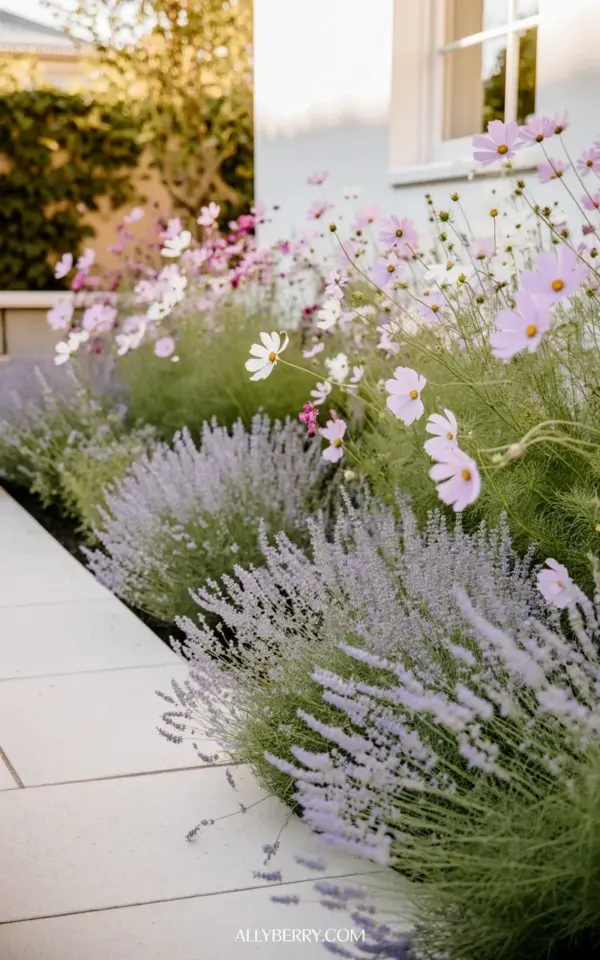
The Dirt Path Problem and One Simple Fix
I remember staring at the bare strip of dirt that ran from my driveway to the front door. It wasn’t just ugly, it turned muddy after every rain and baked into hard cracks under the summer sun. That’s when I decided to give my front yard garden makeover a real chance. What I didn’t expect was how many small mistakes could kill the dream. The vision in my head looked exactly like that photo you’ve probably saved on Pinterest: a white stone pathway bordered by soft lavender blooms and airy white cosmos, all lit by warm golden light. But getting from a dry path to that romantic, slightly wild flower garden took some trial and error. Let me walk you through the six biggest mistakes I made (and how you can skip them).
Mistake #1: Laying a Straight Walkway Instead of a Soft Curve
I started by digging a perfectly straight trench. It felt efficient and logical. But straight lines in a front yard garden look stiff, especially when you want flowers to spill over the edges. The photo that inspired this whole project shows a gentle, meandering border. That curve is what makes the lavender and cosmos look like they belong there.
If you dig a straight path, your flowers will look like soldiers standing at attention. Instead, mark your pathway using a garden hose or a rope. Lay it in a soft S-curve that follows the natural flow of your yard. Then step back and look at it from your front door. Adjust until the curve feels easy, not forced. This one change turned my boring dirt strip into something that invites you to walk.
Mistake #2: Picking the Wrong Stones for the Path
I grabbed cheap gravel from the big box store, thinking any stone would do. Big mistake. The first rain washed the small pebbles into my flower bed, and the jagged edges tore at the lavender stems. The pathway in the inspiration photo uses light gray, flat stones, almost like irregular flagstones set into the ground. They sit smooth and stable, creating a soft contrast with the flowers.
For a similar effect, choose stones that are at least two inches thick and have a weathered, matte finish. Avoid polished or bright white stones, they reflect too much light and look artificial. I used bluestone offcuts, but you can also use large concrete pavers if you sand down the sharp corners. The key is to set them in a bed of decomposed granite so they don’t shift. And leave gaps between stones for the cosmos and lavender to poke through later.
Mistake #3: Planting Too Neatly and Forgetting the Wildness
I arranged my lavender in perfect rows, like a vegetable garden. It looked tidy but boring. The dreamy garden I wanted had that “natural, slightly wild” look, where the lavender cascades over the path and the cosmos wave freely. White cosmos are tall and airy, and they need room to lean and spread.
Here’s what I learned: plant lavender in a staggered double row, not a straight line. Place the cosmos further back (closer to the house) and let them grow through the lavender. The photo shows some cosmos stems bending over the stones. That’s not an accident. To get that look, don’t stake or trim them. Let the cosmos self-sow and fill gaps naturally. Yes, it means a little chaos, but that chaos is what makes your front yard garden feel like a cottage garden, not a parking lot.
Mistake #4: Ignoring the Timing of Blooms
I planted everything at once, expecting a full show from day one. But lavender and cosmos have different peak seasons. Lavender blooms in late spring to early summer, while white cosmos hit their stride in late summer and keep going until frost. In the dream photo, both are in full bloom together, which means they overlap for about four to six weeks in early to mid-summer.
To pull that off, you need to buy lavender varieties that rebloom or have a long flowering window. Look for ‘Phenomenal’ or ‘Grosso’ lavender, they keep pushing new flowers into midsummer. For cosmos, choose ‘Purity’ (dwarf white) or ‘Sensation’ series. Sow cosmos seeds two weeks after your last frost date. Then pinch the young plants back when they are six inches tall. That delays blooming just enough to sync with the lavender’s second flush. It takes a little planning, but when both are open at the same time, the effect is exactly that soft, romantic feeling from the photo.
Mistake #5: Forgetting About the Light (Golden Hour Matters)
I planted my garden facing east, thinking morning sun was enough. But the magic you see in the photo, that warm golden light, happens in late afternoon when the sun is low and the house wall catches the glow. My white cosmos looked pale and washed out in the harsh midday sun. Moving my pathway to a west-facing side of the house did the trick.
If you can’t change the orientation, plant taller cosmos on the west side of the path to shield the lavender from intense afternoon rays. The warm light filters through the white cosmos petals and creates that soft backlit effect. Also, paint your house wall a warm off-white or cream if it’s currently gray or beige. In the photo, the white house wall acts like a reflector, bouncing light onto the flowers. That’s why the whole scene glows.
Mistake #6: Overwatering the Lavender While Trying to Baby the Cosmos
Lavender hates wet feet, while cosmos can handle a bit more moisture. I treated them the same and ended up with root rot on three of my four lavender plants. The soil needs to drain fast, especially along that stone pathway. If you set your stones in decomposed granite or sand, water will run away from the lavender roots.
My fix: plant lavender slightly higher than the surrounding soil (create a small mound). Water the cosmos a foot away from the base, not directly on the lavender. And mulch with small gravel or crushed shells instead of bark. Bark retains moisture and will kill lavender faster than drought. In the photo, you can see the soil around the lavender is bare and rocky, not covered in dark wet mulch.
The One Mistake I Almost Made Again (Spacing)
I wanted an instant garden, so I crammed the lavender close together. By the second year, they were choking each other, and the cosmos couldn’t reach the sun. White cosmos need at least 12 inches between plants, and lavender needs 18 to 24 inches. In the dream garden, the plants look full but there is still visible stone between clumps.
Trust me, the “wild” look in the photo is not clutter, it’s controlled chaos. Space your lavender with room to grow, and let the cosmos fill in gaps with their fine, ferny foliage. If you have bare spots the first year, plant some annual filler such as white alyssum or trailing verbena. But do not overstuff. A crowded garden looks messy, not romantic.
Bringing It All Together
That first summer after fixing these mistakes, I stood on my front step and saw exactly what I had pinned a year earlier. The white stones, the pale purple lavender, the drifting white cosmos, and the golden light through the window. It felt like a small victory. A front yard garden makeover with a lavender and cosmos pathway is totally doable if you avoid the shortcuts. Start with a curved border, choose the right stones, let the plants be a little messy, and pay attention to timing and light. If you try it, I’d love to hear how your own path turns out. Drop a comment below or tag me in your garden photos. Happy planting.
#frontyardgarden #curbappeal #flowergardenideas #landscapingdesign #homeexterior
Leave a Comment