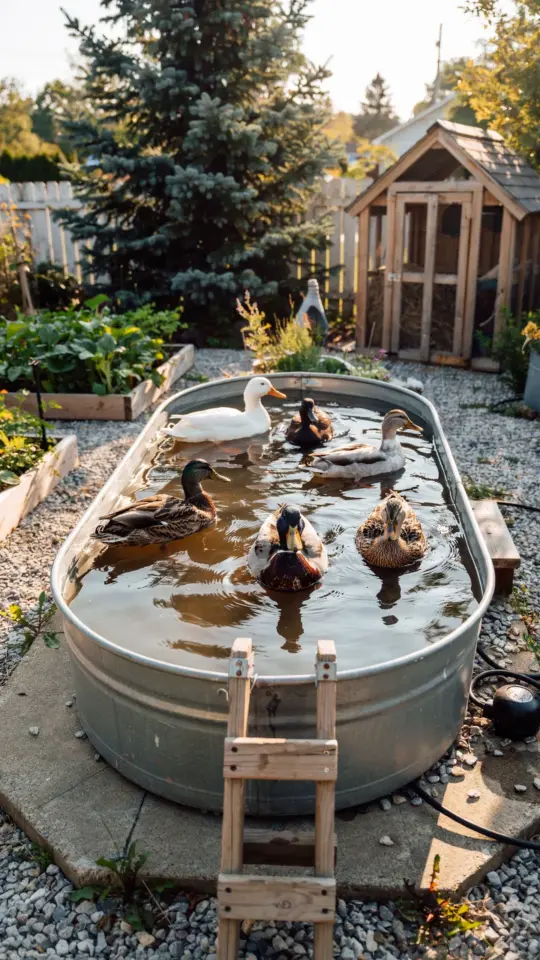
If you have been looking for a way to give your ducks more enrichment without spending a fortune on prefab housing, a DIY duck coop with pool is the perfect weekend project. Ducks need water to stay healthy, but muddy puddles and heavy kiddie pools can turn into a mess fast. A combined enclosure with a built in splash pad keeps your birds clean, their space dry, and your yard looking decent. This roundup covers seven distinct design ideas so you can pick the plan that fits your space, your skill level, and the personality of your flock.
The Coop and Pool Combo for Backyard Flocks
The most practical setup links the coop directly to a shallow splash area. This keeps the wet zone separate from the sleeping quarters and prevents moisture from rotting the wood inside the house. A simple ramp from the coop door leads down to a low sided pool, which makes it easy for ducks to hop in and out on their own.
One of the cleanest versions I have seen uses a galvanized stock tank sunk into the ground. The tank sits inside a fenced run that connects to the coop. The ducks exit the house, walk down a short ramp, and step directly into the water. The surrounding ground stays dry because the tank edge sits slightly above the soil. This design works well for a small flock of three to five ducks and is easy to drain with a garden hose.
Splash Pad Ideas That Keep Water Clean
Standard kiddie pools get gross within a day because ducks drag mud and droppings into the water. A better duckpoolideas approach is to build a shallow concrete pad with a center drain. You pour a small slab, slope it slightly toward the drain, and add a rubberized coating for traction. The ducks splash around and the dirty water runs off into a gravel bed or a nearby flower bed.
If concrete sounds like too much work, try a heavy duty plastic boot tray instead. These trays are wide, shallow, and have a textured bottom that gives ducks good footing. Place the tray on a bed of pea gravel so the splash water drains away quickly. Empty and rinse the tray each morning, and the whole process takes less than two minutes. Your ducks get fresh water daily and you avoid the swampy mess that comes with deep pools.
- Use a stock tank or boot tray instead of a deep kiddie pool.
- Slope the ground slightly so water runs away from the coop.
- Add a drain or a gravel bed to handle overflow.
- Rinse the splash area every morning with a hose.
Secure Waterfowl Housing with Natural Drainage
Waterfowlhousing needs to balance security with ventilation and drainage. Ducks produce a lot of moisture from their breath and their wet activities, so a sealed box will quickly become moldy. The best designs use hardware cloth instead of solid walls on the lower half of the coop, which lets air flow through while keeping predators out.
I recommend raising the coop off the ground by at least twelve inches. This creates a dry area underneath where the ducks can rest in the shade, and it prevents water from seeping into the floor during rain. Use pressure treated lumber for any wood that touches the ground, and cover the floor with a linole offcut or a layer of plastic sheeting before adding bedding. This makes cleaning much faster because nothing soaks into the wood.
For the splash pad area, dig a shallow trench around the perimeter and fill it with gravel. This catches overspray from the pool and directs it away from the coop walls. A little planning here saves you from dealing with mud holes later in the season.
Blending the Enclosure with Outdoordecor
A duck coop does not have to look like a construction site. With a few material choices you can match your outdoordecor and keep the neighbors happy. Paint the exterior with a muted sage green or a warm slate gray instead of bright primary colors. Use cedar shingles or reclaimed barn wood for the siding so the coop blends into the garden.
Plant shallow rooted ground cover around the run. Creeping thyme and clover handle duck traffic well and add a soft green look that hides the hardware cloth and fence posts. Place a few large potted ferns near the water area to soften the edges and give the ducks some visual cover. Ducks feel safer when they have places to duck under, and the plants make the whole setup feel more intentional.
A simple way to tie it all together is to use the same fencing style you already have in your yard. If you have black metal garden fencing, use black hardware cloth for the run. If your garden beds are edged with stone, use flat field stones around the base of the coop. These small touches make the enclosure look like it belongs rather than looking like a temporary cage.
Weekend Project Ideas for Backyardinspo
If you are looking for backyardinspo that you can actually finish in two days, start with a pallet coop. Four
#backyardflocks #duckpoolideas #waterfowlhousing #outdoordecor #backyardinspo
Leave a Comment