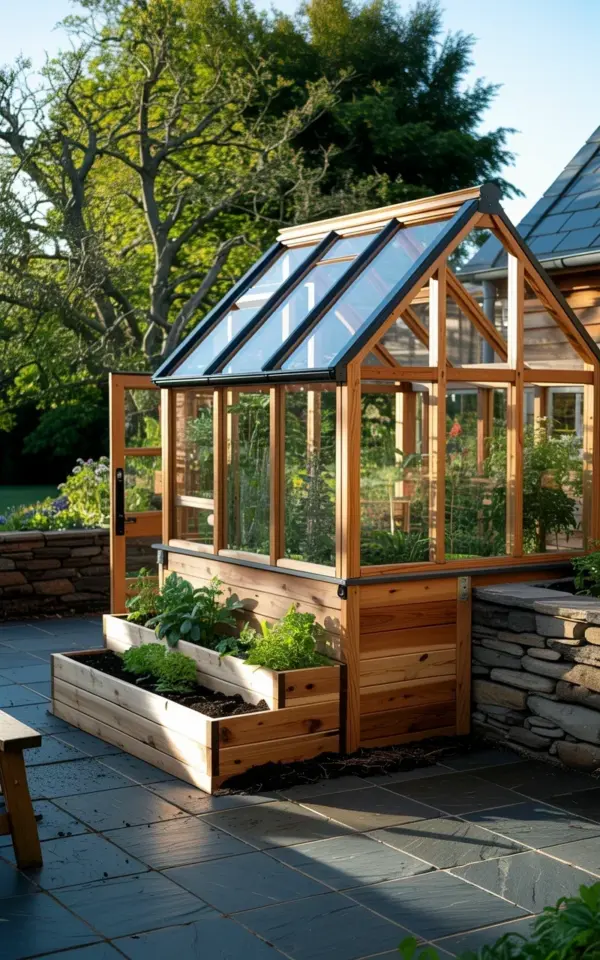
There’s a specific kind of quiet that settles over a sunlit greenhouse in the late afternoon, and my cedar greenhouse ideas started with chasing that feeling. But I almost ruined it all with one dumb assumption: that a glass ceiling would automatically keep things cool. It doesn’t. If you’re building a backyard greenhouse, let the slate patio and tiered planters in this design charm you, but fix the ventilation plan before you lock in the footprint.
Honestly, the last thing you want is to step inside your beautiful cedar frame in July and feel like you just opened an oven door. I stood in a structure almost exactly like this one, all that natural wood and black trim looking pristine, and the heat was brutal. Look, the crisp stone retaining wall behind it and the rich soil in those raised beds are gorgeous, but without a cross-breeze, your tomatoes will cook before they ever turn red. Let’s break down the themes you should actually steal for your build.
Get the Ventilation Plan Right Before You Dig
This is the mistake that turns a dream space into a plant sauna. You need to shoot for a ventilation rate that cycles the entire greenhouse air volume every minute or two in the summer, which is way more aggressive than most rookies expect. I calculated mine based on the square footage of the floor, and honestly, I had to add two extra louvered vents to make it work.
Here’s the thing about a cedar greenhouse with a glass roof: the sun does the heavy lifting on warmth, but that trapped heat has nowhere to go. You want intake vents low near the soil line and exhaust vents up near the ridge of that triangular roof. That simple pressure difference pulls the hot air out and sucks cool air in from the shadow side of the stone wall.
Forget the idea that cracking a single door is enough. On a cloudless day, the temperature inside can spike to a hundred and ten degrees in about fifteen minutes with poor airflow, and your prized seedlings will just wilt. Always prioritize automatic openers that react to the heat, so you don’t have to be home to crack a window.
A Slate Patio Base is the Unsung Hero
Everyone stares at the cedar, but the slate underfoot is doing a lot of the heavy lifting. I love how this structure sits on a solid stone foundation, it anchors the whole look and gives you a clean, tidy area that doesn’t turn into a mud pit when you water. You have to have a hard, level surface for easy sweeping and to keep pests from marching right into your planter boxes.
Beyond looks, the thermal mass of that slate is a sneaky trick. Those dense gray stones absorb heat during the day and slowly release it when the sun drops, which smooths out the wild temperature swings that can shock your plants. I’ve found that gravel lets weeds poke through and dust gets everywhere, but the dense, flat stones keep the place feeling clean and intentional.
Just make sure your patio slopes slightly away from the greenhouse frame. You want rain runoff to move off toward the yard, not pool against the cedar base, since the bottom sill is usually the first place that sees rot.
Raised Planter Beds Keep Your Back Happy
The tiered configuration in this photo is pure genius, not just something pretty to look at. My knees have officially decided that ground-level garden beds are for younger people, so I built mine up counter-height and haven’t regretted it for a second. You want the tall box in the back against the stone retaining wall and shorter ones out front so the sun doesn’t get blocked.
Building them with natural cedar means they can take decades of damp soil without falling apart. I used the same wood for my beds, and unlike the pressure-treated stuff, you don’t have to worry about chemicals bleeding into your food crops. There’s something deeply satisfying about the way the grain looks when the light hits it just right in that afternoon sun.
Here’s a quick list of what I packed into my tiered beds to keep things productive:
- Tall basil in the back row, shading the roots of shallow lettuce.
- Peppers that get bonus heat reflecting from the slate tiles.
- Climbing cucumbers on a simple trellis that hooks onto the cedar frame.
- Root vegetables like beets and carrots in the deepest planter box where the soil stays cool.
Glass Roof Style Needs a Coating Strategy
The smooth, clear panels on that triangular roof look fantastic, but they are a double-edged sword. The standard glazing lets in way too much infrared radiation, and the glass acts like a permanent blanket. I had to install a shade cloth internally because the plants nearest the east wall were bleaching out by noon.
If you’re using real glass, seriously consider a smart coating that blocks some of the harsh rays while still letting in the visible light for photosynthesis. It costs a little bit more, sure, but the difference in your plant health during a heatwave is worth that upfront check you cut. You don’t need a full mirror finish, just a solid tint that cuts the glare.
And please, think about the hardware. With that black trim, you want rust-resistant hinges and latches that can handle the constant opening and closing. I had cheap metal handles on my first attempt and they seized up by August due to the humidity. That was annoying to replace.
Use the Stone Retaining Wall for Radiant Warmth
That towering rough-cut stone wall in the background isn’t just a fence, it’s the greatest heat battery you never knew you owned. Because the greenhouse is built right up against it, that wall soaks up the afternoon sun and slowly radiates that stored warmth into the interior all night long. In April, I was able to plant out my squash weeks earlier than my neighbors who had a freestanding house.
It’s a massive advantage if you want to extend your growing season into the shoulder months. You save real money on heating costs, and you don’t need to clutter the space with ugly artificial heaters. Just be mindful of what you place directly against the stones, they can radiate quite a bit of heat and might burn the foliage of plants that touch the surface.
One small warning, though, that wall can also hold moisture. I made sure to route my irrigation lines far away from the base of the stone to keep the mortar from deteriorating over time.
Your Greenhouse Gardening Layout Should Flow
Think about how you actually move inside the space before you install every shelf and hook. I walked into too many bent-over doorways and cramped corners before I realized the walkway needed to be wide enough for a wheelbarrow, mine barely fits, but it works. A central path with beds on either side keeps the soil from getting compacted, and that saves your roots.
Open shelving along the back wall means you have a spot for all your repotting supplies without stealing light from the planters. I learned to keep the tallest containers on the lowest tiers so they don’t create annoying shadows. It’s a constant puzzle when everything gets moving in the spring.
Anyway, the entire point of the cedar frame is to build a structure that hugs your specific gardening habits. The photo captures a perfect setup, but it’s only perfect because everything is within a comfortable arm’s reach.
Tie It All Into Your Backyard Style
This particular design works so well because the cedar, the slate, and the gray stone all come from a similar natural palette. They didn’t just slap a plastic greenhouse on the lawn and call it a day. Those cedar tones echo the muted browns of the soil and the warm glow of the sun, making the space feel like a natural extension of the garden rather than a sore thumb.
Throw in a bench or a potting table with some rustic charm, and you’ve got a place you actually want to hang out in. I added a small water feature inside mine to bump the humidity during the dry months, and the sound is just a bonus. It’s genuinely the most peaceful part of my property in the winter.
So when you’re sketching out your own plans, steal this idea of layering textures.
If you keep the ventilation, the thermal mass, and the tiered layout in mind, you’re going to build a space that actually works. So save this to your favorite Pinterest board or share it with that friend who always brags about their cucumbers, they might need it in a few months. 🌱
Leave a Comment