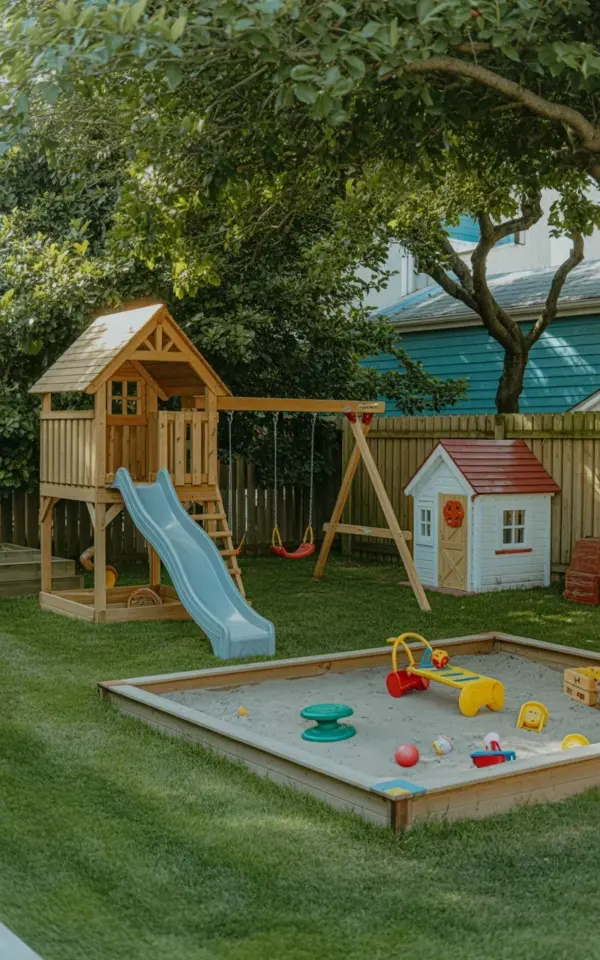
Look at that curved retaining wall in the photo. It does more than hold back dirt, it wraps the whole kidsplayarea into a cozy corner. Honestly, that kind of intentional design is rare in a backyard playground. Most backyard playgrounds start with a shopping cart and a credit card, then end up misshapen, unsafe, or just plain ignored.
The good news is that any backyard playground can look this good if you avoid a few mistakes I see all the time. I’ve spent years watching kids climb, swing, and dig, and I’ve also spent years watching parents fix things that could have been done right the first time. So let’s talk about the common mistakes, and how to dodge them.
Mistake #1: Placing the Wooden Playhouse in the Wrong Spot
The wooden playhouse in the photo sits against that curved retaining wall, tucked in but visible. That’s the sweet spot. A playhouse placed in the dead center of the lawn feels exposed, and kids often abandon it because there’s no sense of enclosure. But shove it too far behind a shed, and you’ll never want to watch them from the kitchen window.
Put it where you can see it from wherever you spend the most time. Also think about afternoon sun. A white roof like the one in the photo reflects heat, but the walls still absorb it. Give the playhouse a little shade from a tree or an overhang.
Mistake #2: Buying a Wooden Playhouse Without Checking the Wood Treatment
Here’s something nobody tells you: not all “natural wood trim” is built the same. The wood in the photo has that warm, natural look, but it’s treated to survive rain, snow, and the occasional juice box spill. Cedar and redwood are naturally rot resistant, but they cost more. Pressure-treated pine is cheaper, but it needs time to dry before kids touch it, and it can crack if you don’t seal it.
I once saw a playhouse that looked perfect in April and had warped boards by August. Check what the manufacturer actually uses. Ask if the
Leave a Comment